
Shopping guide
Build a Decades-Long Food Reserve with Heavy-Duty Mylar Solutions
Stock your pantry against inflation and emergencies with durable, light-blocking Mylar pouches, oxygen absorbers, and essential survival preparedness supplies.
Discover how Wallaby Goods helps you store dry pantry staples for up to 30 years with food-grade Mylar bags, oxygen absorbers, heat sealers, and survival gear.
01
Meet the merchant
Choosing the Right Mylar Bag Sizes for Pantry and Bulk Storage
When preparing dry food stores to protect against supply disruptions and inflation, selecting appropriate bag capacities is critical. Wallaby Goods structures its product catalog around real-world pantry use, ranging from 1-quart and gusseted 1-gallon pouches to heavy 5-gallon bucket liners. For everyday household dry goods—such as white rice, split peas, pinto beans, rolled oats, and baking flour—1-gallon gusset bags provide the ideal balance. They stand upright autonomously during filling, accommodate roughly 5 to 7 pounds of dry grain, and ensure you only unseal manageable amounts when rotating pantry supplies.
For high-volume staples you intend to store untouched for a decade or more, 5-gallon Mylar bags paired with food-grade plastic pails offer maximum volume efficiency. A single 5-gallon liner protects roughly 25 to 35 pounds of bulk grains or legumes. Placing the Mylar liner inside a rigid bucket shields the aluminum foil layer from external punctures and prevents rodents from chewing through your investment. Meanwhile, smaller pouches and boil-safe MRE-style bags excel for backpacking meals, dehydrated vegetable blends, and customized seasoning kits where single-serving portions make the most sense.
02
Offers and conditions
| Offer | Value / code | Conditions |
|---|---|---|
| 25% off orders $150+ · No code needed Source |
25% off orders $150+ | 25% off orders $150+ · No code needed |
| Save $37.50 Ends Nov 30 at 11:59pm PT. The $150 minimum counts eligible items only. Source |
Save $37.50 | Ends Nov 30 at 11:59pm PT. The $150 minimum counts eligible items only. |
| Save $50 Ends Nov 30 at 11:59pm PT. The $150 minimum counts eligible items only. Excludes Aquatabs and ThyroSafe. Source |
Save $50 | Ends Nov 30 at 11:59pm PT. The $150 minimum counts eligible items only. Excludes Aquatabs and ThyroSafe. |
| Save $75 Ends Nov 30 at 11:59pm PT. The $150 minimum counts eligible items only. Excludes Aquatabs and ThyroSafe. Source |
Save $75 | Ends Nov 30 at 11:59pm PT. The $150 minimum counts eligible items only. Excludes Aquatabs and ThyroSafe. |
| Save $200+ Source |
Save $200+ | Save $200+ |
| 25% off $150+ Ends Nov 30 at 11:59pm PT. ✓Free US shipping $25+ Source |
25% off $150+ | Ends Nov 30 at 11:59pm PT. ✓Free US shipping $25+ |
Before ordering, check price, stock, shipping, returns, and offer terms on the merchant checkout page.
03
Featured picks

04
Before you order
Calculating Oxygen Absorber Needs for Long-Term Shelf Life
Mylar alone provides an impermeable barrier against moisture and vapor, but trapped air contains approximately 21% oxygen. Left unchecked, residual oxygen allows insect larvae to hatch, speeds up oxidation, and creates rancidity in food fats. Iron-based oxygen absorbers eliminate this atmospheric oxygen, leaving an inert nitrogen environment inside the pouch. A standard guideline for dense staples like white rice, wheat berries, and flour packed into a 1-gallon bag is approximately 400cc of absorber capacity. Fluffier, air-trapping items—including elbow macaroni, freeze-dried fruit, and rolled oats—benefit from 500cc or more to clear the greater interstitial headspace.
For 5-gallon buckets, storage planners should deploy between 2,000cc and 2,500cc of oxygen absorption. One common operational challenge with oxygen absorbers is that they activate rapidly when exposed to ambient room air. Wallaby addresses this by packaging absorbers in small clusters of 10 rather than loose bulk sleeves of 100. This design choice prevents your stock from becoming exhausted while you work your way through bagging sessions. Remember that certain ingredients—namely white sugar, table salt, baking powder, and baking soda—should never be stored with oxygen absorbers, as removing oxygen turns them into solid, rock-hard blocks.
Proper Sealing Techniques and Essential Emergency Supplies
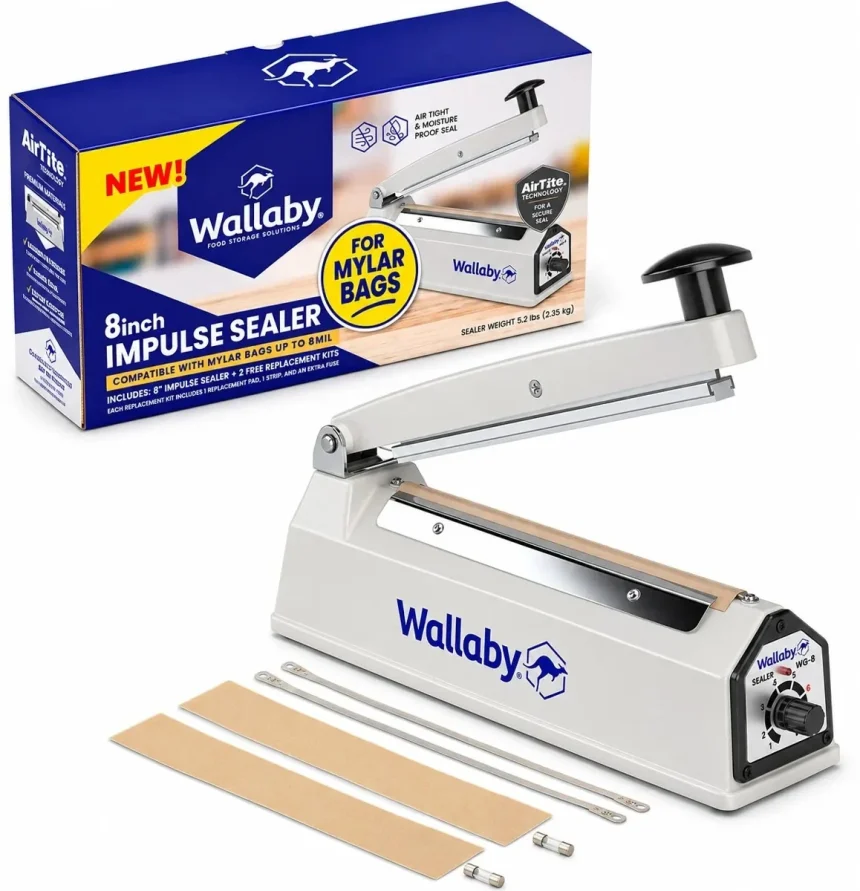
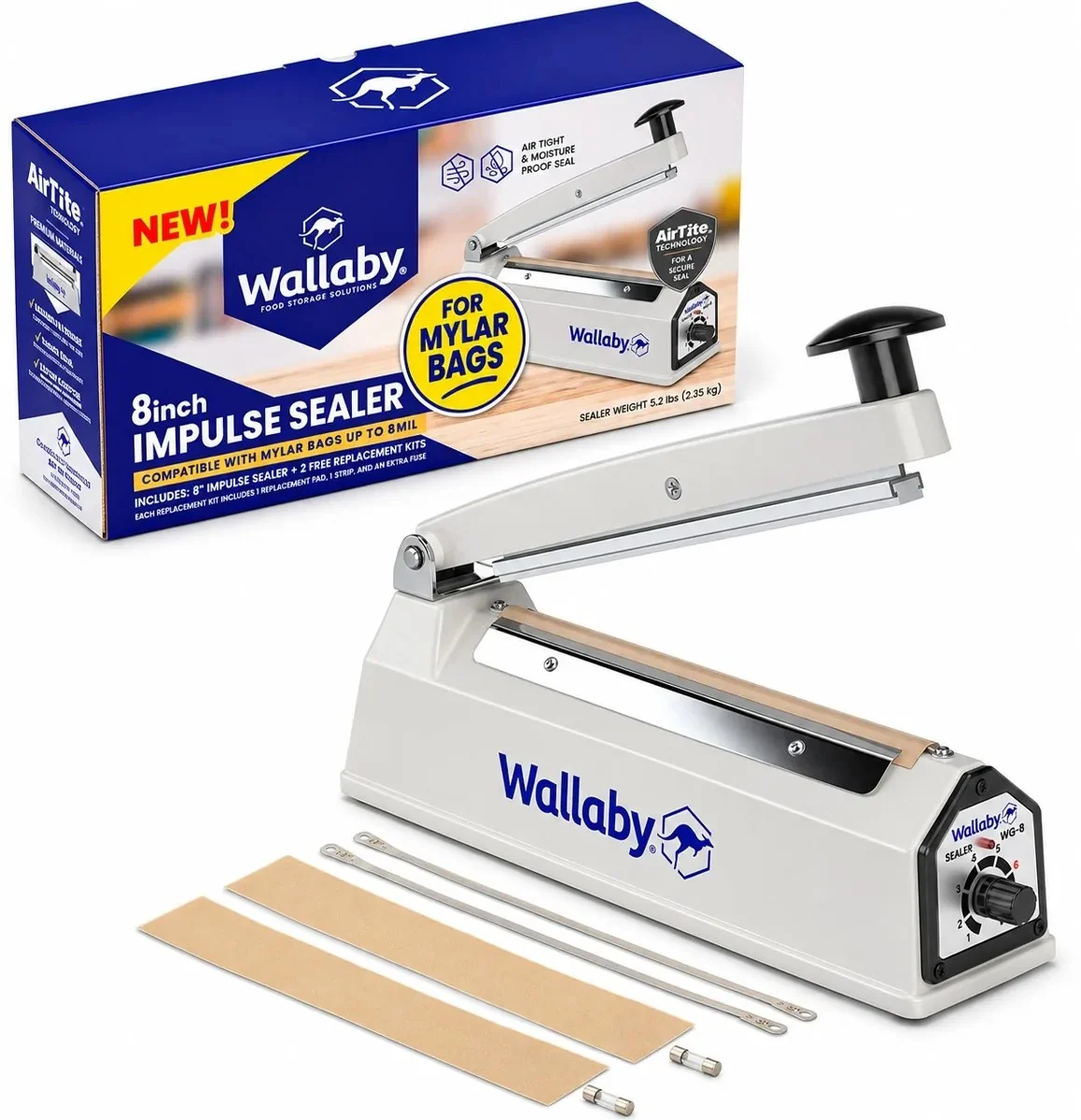
Achieving an authentic, hermetic closure requires direct heat application. While an ordinary household clothes iron or hair straightener can fuse the polyethylene layer in an emergency, an 8-inch impulse sealer provides far greater consistency. Tabletop impulse units deliver targeted heating cycles across a defined seal bar, eliminating hot spots that could burn through the outer film. Before closing your bag, compress out as much excess air as possible by hand, drop in your fresh oxygen packet, and press the heating element firmly across the top edge. A successful seal looks uniform and unbroken, showing no wrinkles or open air gaps along the seam line.
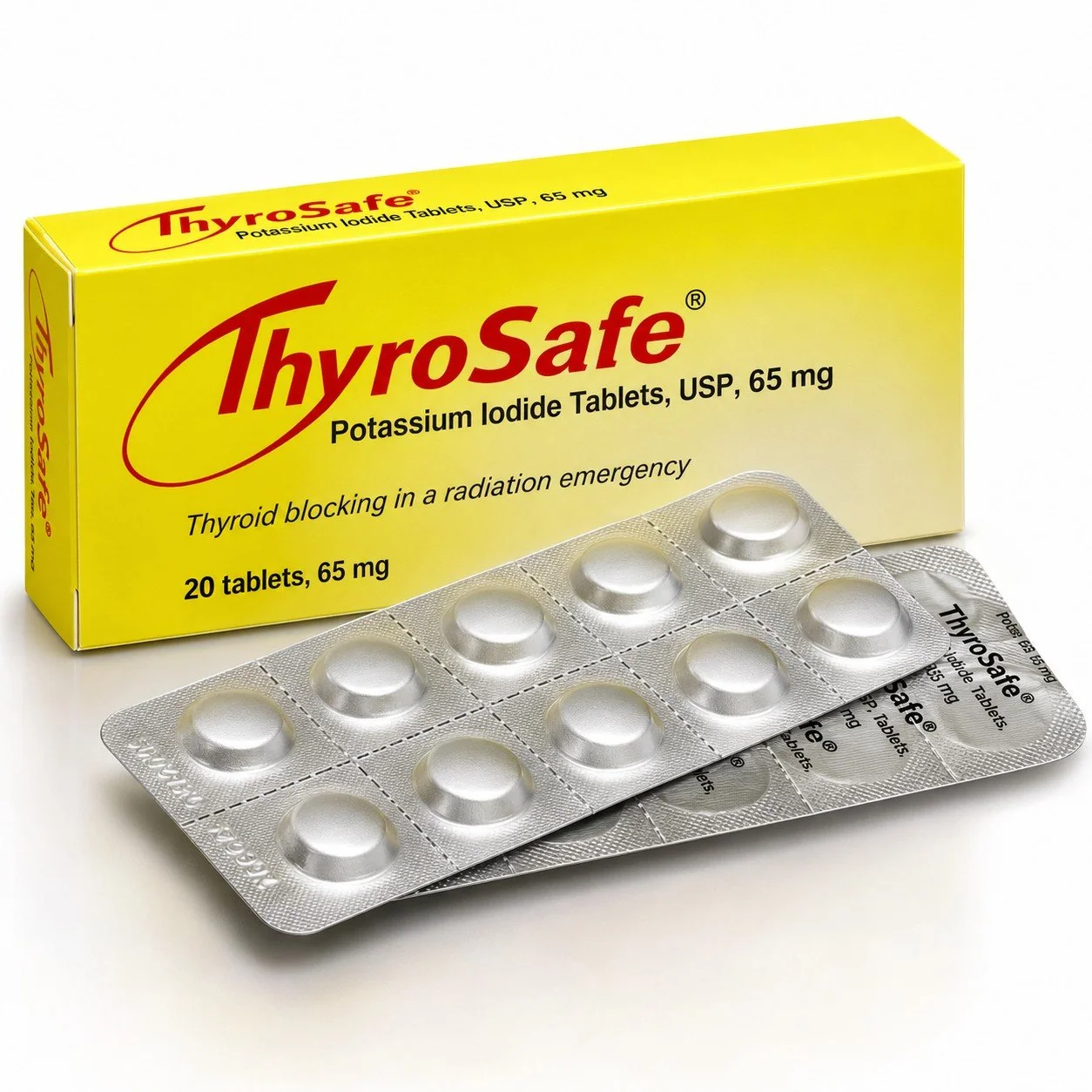
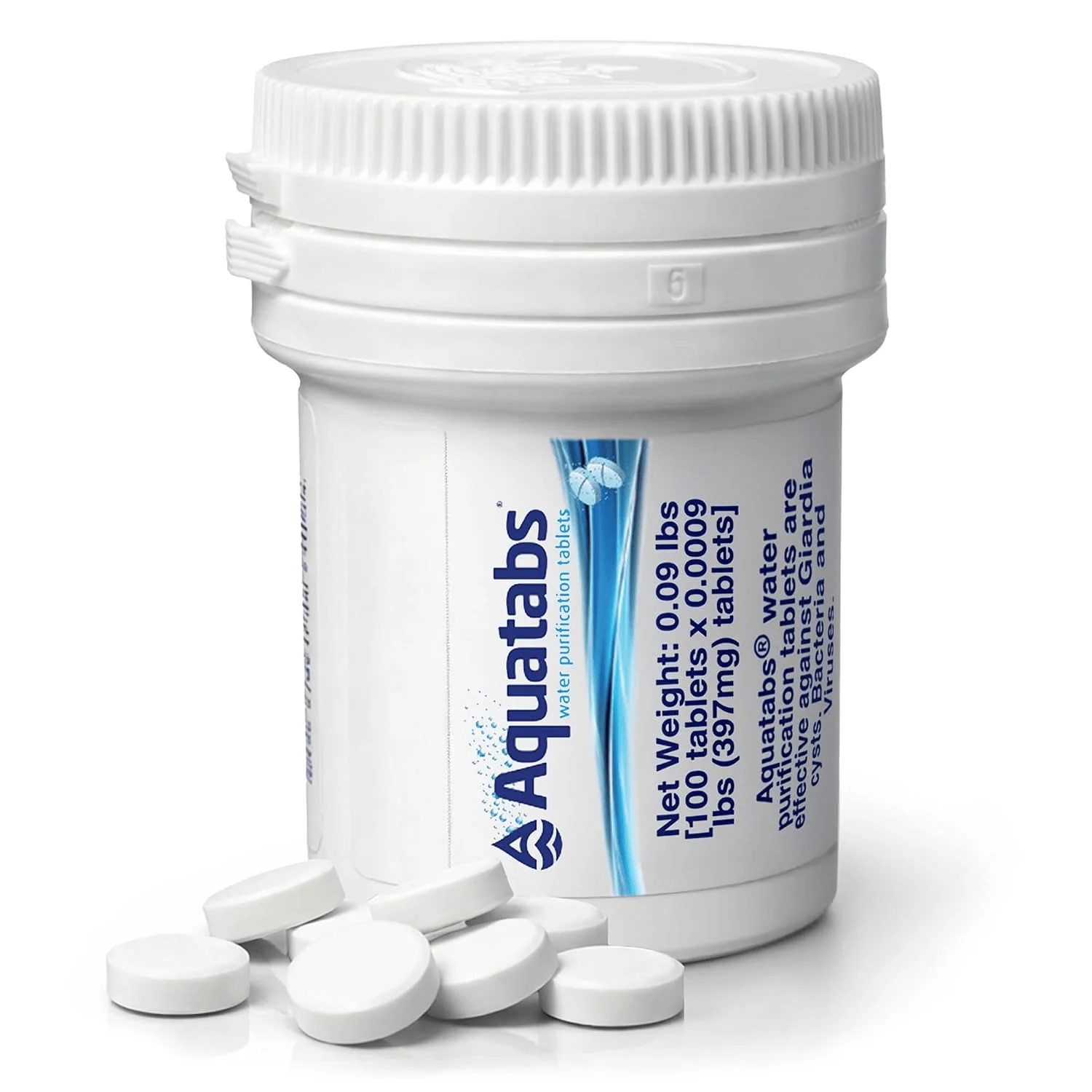
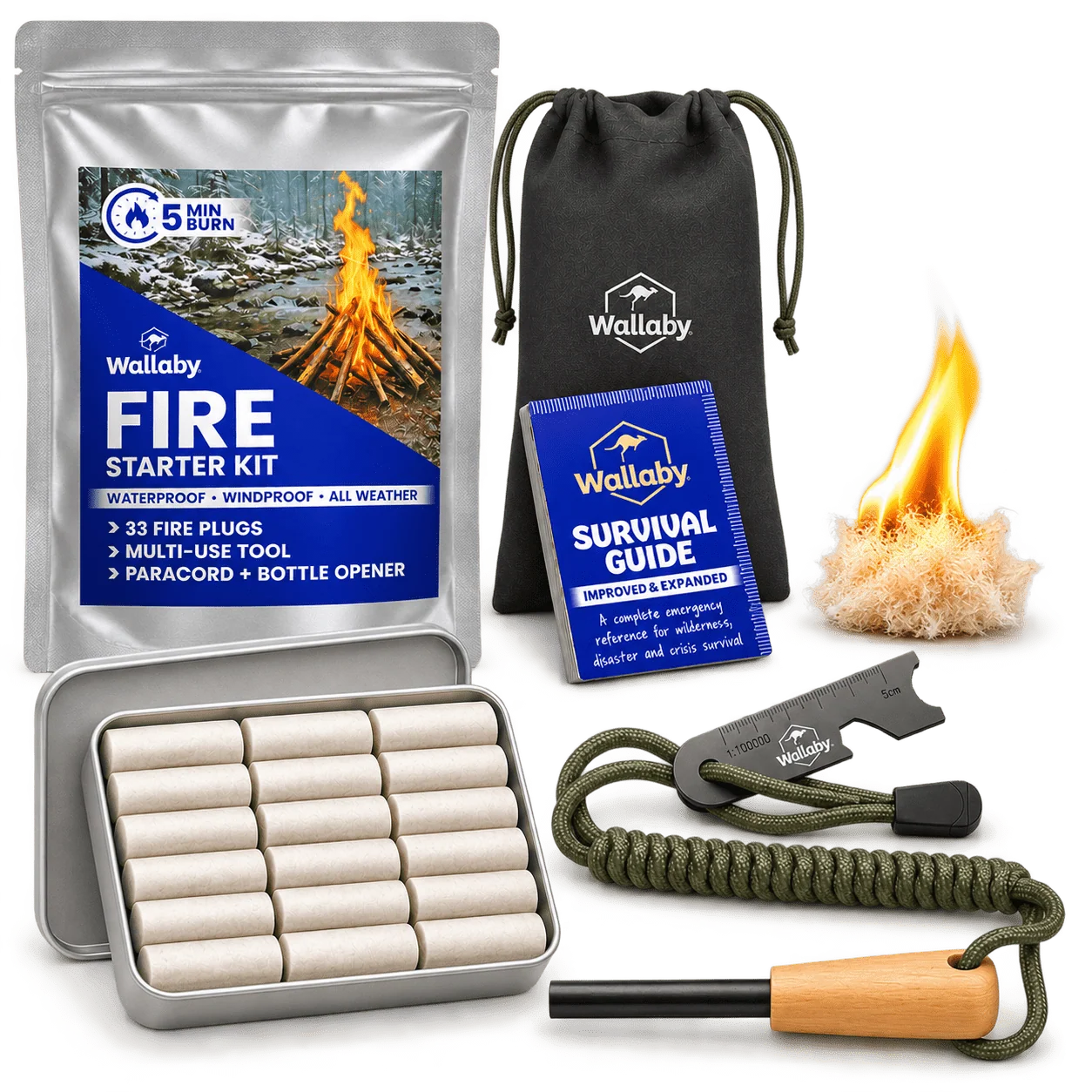
A well-rounded household emergency plan extends past calories alone. Safe hydration and utility resilience remain equally vital during prolonged disruptions. Integrating portable water treatment—such as Aquatabs effervescent purification tablets—ensures your stored grains can be cooked with safe, pathogen-free water even if municipal systems fail. Adding compact protective gear, including Mylar thermal ponchos, waterproof fire ignition kits, and specialized radiation medical supplies like ThyroSafe potassium iodide tablets, transforms your pantry setup into a robust, comprehensive family emergency cache.
- Verify moisture content of foods before packaging; only dry goods under 10% moisture (like white rice, beans, and oats) are suitable for oxygen absorbers.
- Match absorber capacity to food density—dense grains require around 400cc per gallon, while airy foods like pasta need up to 500cc.
- Confirm final item pricing, pre-order timelines, and promo exclusions (such as Aquatabs or ThyroSafe) directly on the merchant checkout screen.
05
FAQ
What foods are best suited for packaging in Mylar bags?
Dry goods containing less than 10% moisture and minimal fat content store best. Top choices include white rice, dried beans, lentils, rolled oats, white flour, pasta, dehydrated vegetables, and freeze-dried meals. High-fat items like brown rice, nuts, and meats can spoil and should be avoided for multi-year preservation.
Why do oxygen absorbers not work like vacuum sealers?
Oxygen absorbers consume only oxygen (which accounts for roughly 21% of air), leaving the remaining 79% nitrogen behind. Because nitrogen remains, the bag may shrink slightly but will not always look completely vacuum-crushed. That slight indentation is normal and indicates the absorber has functioned properly.
Which ingredients should NOT be sealed with an oxygen absorber?
Granulated white sugar, salt, baking soda, and baking powder should be sealed in Mylar bags without oxygen absorbers. Removing oxygen from these specific dry baking staples causes them to crystallize into solid, unmanageable blocks.
Can I seal Wallaby Mylar bags using a regular household iron?
Yes. While a dedicated 8-inch impulse sealer provides the most uniform result, a clean household clothes iron set to high (cotton/linen setting) or a wide hair straightening iron works effectively when pressed across a smooth, flat edge for 2 to 4 seconds.
How long will rice and beans last when sealed in Wallaby Mylar?
When sealed in heavy-duty foil Mylar with adequate oxygen absorption and stored in a cool, dark, temperature-stable room (below 70°F), low-moisture staples like polished white rice and dried beans can maintain nutritional quality and taste for up to 25 to 30 years.
Disclosure: this article may contain affiliate links. We may earn a commission if you purchase through these links, at no extra cost to you.