


Shopping guide
Build-Ready Fuel Systems and Performance Plumbing
Whether you are tackling an LS swap, transitioning to high-pressure EFI, or plumbing an aggressive carburetor setup, EVIL ENERGY provides modular fuel delivery systems, AN fittings, and matched airflow kits engineered to keep your project running reliably.
Explore EVIL ENERGY fuel system kits, PTFE lines, regulators, and intake upgrades. Learn how to choose the right plumbing and EFI components for your build.
01
Meet the merchant
Selecting the Right Fuel Delivery Setup for EFI and LS Swaps
When transitioning a classic chassis to modern electronic fuel injection (EFI) or executing an LS swap, fuel delivery is often the most critical system to engineer properly. Unlike legacy mechanical pumps that operate between 4 and 7 PSI, modern EFI systems demand steady, high-pressure fuel—frequently fixed around 58 PSI for standard GM LS rails, or dynamically modulated via a 20–120 PSI boost-referenced bypass regulator. Inadequate volume or fluctuating pressure can cause sudden lean spikes under acceleration, endangering internal engine components.
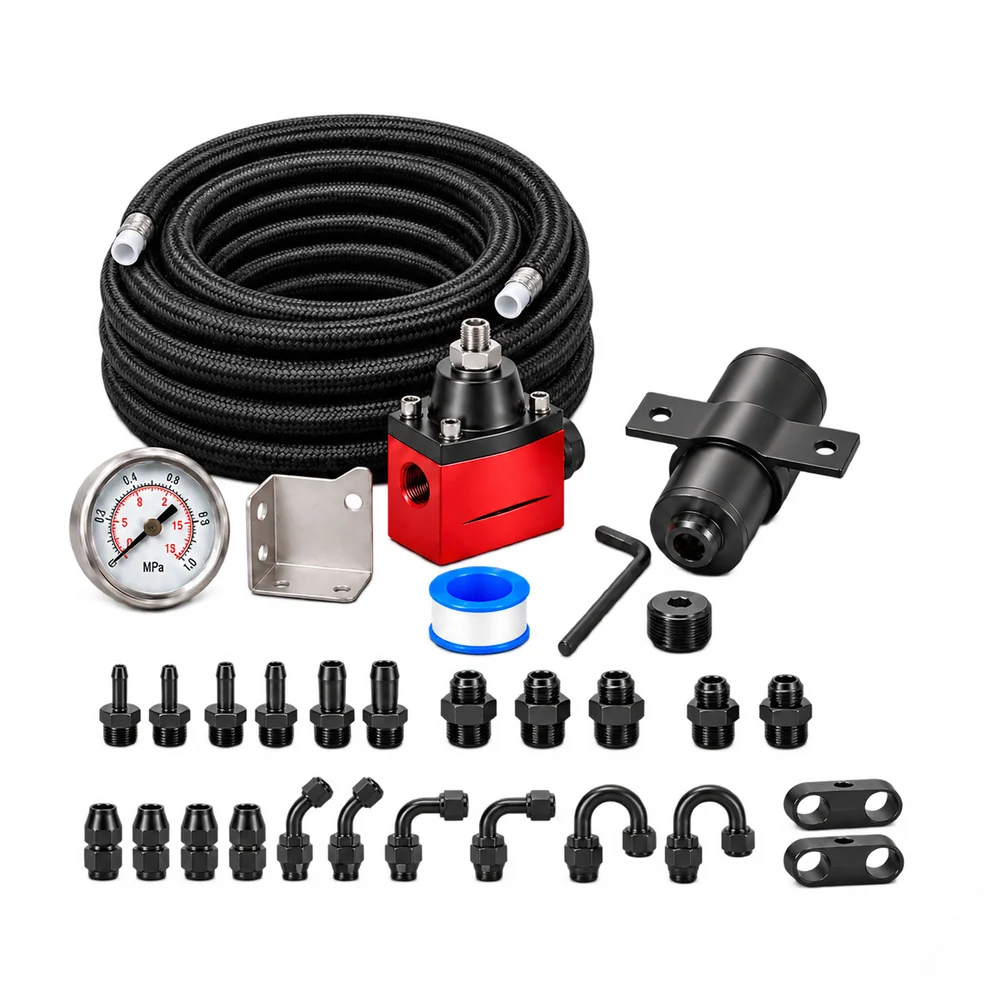
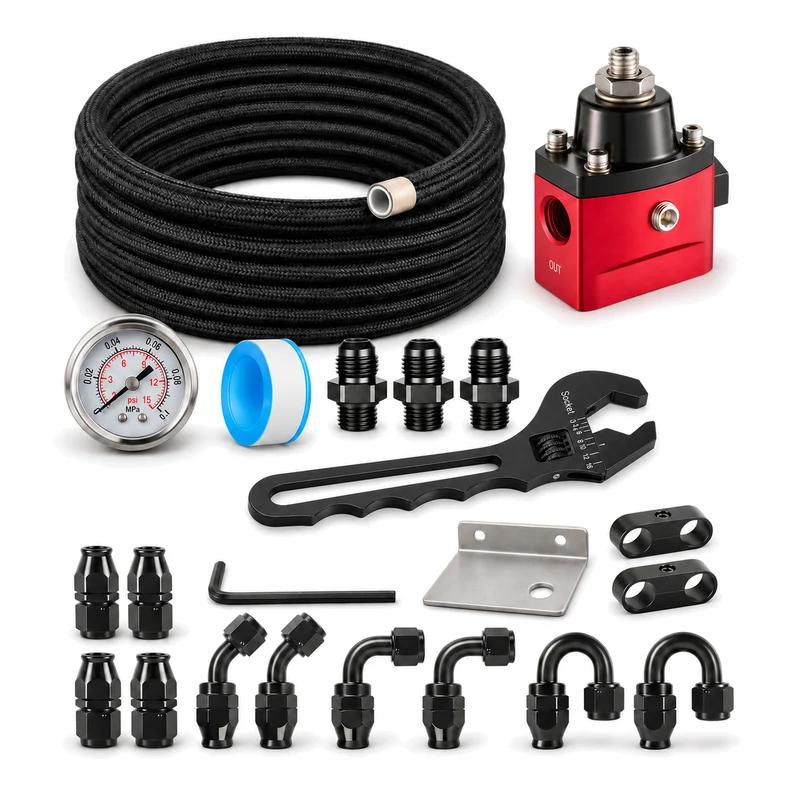
EVIL ENERGY addresses these swap challenges with unified conversion packages that combine external frame-mounted pumps or high-flow 300+ LPH electric pumps with compatible bypass regulators, filters, and AN plumbing. Using a return-style regulator near the fuel rail or fuel cell ensures continuous fuel circulation, which dramatically reduces fuel rail temperatures and prevents vapor lock during hot idle conditions.
- Check Pressure Specs: Match your intake setup with either a factory-calibrated 58 PSI regulator/filter unit for stock LS injectors or an adjustable 20–120 PSI bypass unit for custom aftermarket fuel rails.
- Filter Micron Rating: Run a coarse 100-micron pre-filter before external inline pumps to protect internal impellers, followed by a fine 10-micron post-filter to safeguard sensitive injector nozzles.
- Return Line Sizing: Ensure the return line is at least equal in internal diameter (minimum 6AN / 3/8-inch) to the supply line to prevent backpressure spikes at low engine loads.
02
Offers and conditions
| Offer | Value / code | Conditions |
|---|---|---|
| 10% Off Your First Purchase Source |
10% Off Your First Purchase | 10% Off Your First Purchase |
| Free Delivery Protection Source |
Free Delivery Protection | Free Delivery Protection |
Before ordering, check price, stock, shipping, returns, and offer terms on the merchant checkout page.
03
Featured picks

04
Before you order
PTFE vs. CPE Lines: Choosing the Best Plumbing for E85 and High Pressure
Plumbing a performance vehicle requires choosing between two predominant hose liner materials: Chlorinated Polyethylene (CPE) synthetic rubber and Polytetrafluoroethylene (PTFE). While stainless-steel or nylon-braided CPE hose is flexible and suitable for standard pump gasoline and oil cooler lines, modern fuels containing ethanol blends (E10, E85) can gradually degrade rubber compounds. Over extended periods, microscopic fuel vapors can permeate CPE walls, leading to persistent gasoline smells inside car interiors or garages.
EVIL ENERGY’s PTFE hose lines feature an extruded, chemically inert Teflon-style core reinforced with robust braided jackets. PTFE is impervious to aggressive ethanol blends, race fuels, methanol, motor oils, and brake fluids. Furthermore, its smooth interior wall provides lower friction flow and holds up under the rigorous pressure cycles common in high-horsepower forced-induction systems.
- Vapor Barrier Integrity: PTFE lines guarantee zero fuel smell permeation, making them the preferred choice for lines routed through interior tunnels or enclosed trunks.
- Working Pressure Headroom: Reinforced PTFE hose handles significantly higher burst pressures than standard rubber hose, offering added security in high-pressure fuel injection circuits.
- Assembly Technique: Unlike push-on or compression fittings for rubber hose, PTFE fittings use a dedicated brass olive (ferrule) between the liner and the fitting body. Take care to seat the olive smoothly over the PTFE liner during installation.
Air Intake, Throttle Bodies, and Manifold Upgrades for Performance Builds
Fuel management represents only half of the combustion equation; efficient airflow into the combustion chambers is equally vital. On modern electronically controlled V8 platforms—such as GM 6.2L LS3/L99 engines and Dodge 5.7L HEMI trucks—the factory throttle body and air intake box can create restrictive pressure drops as engine speeds climb. Enlarging the intake bore allows the engine to breathe deeper, improving throttle tip-in and mid-range torque.
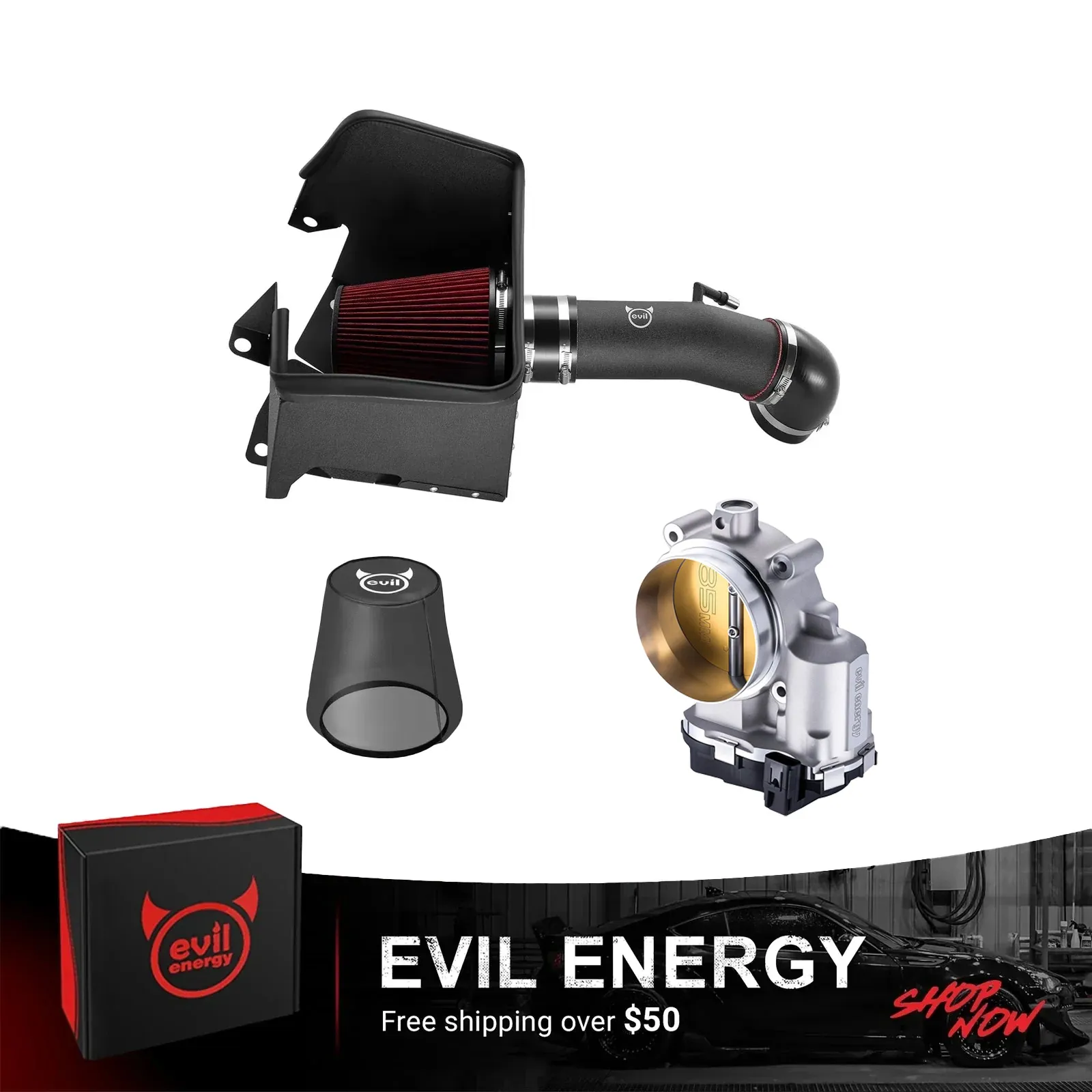
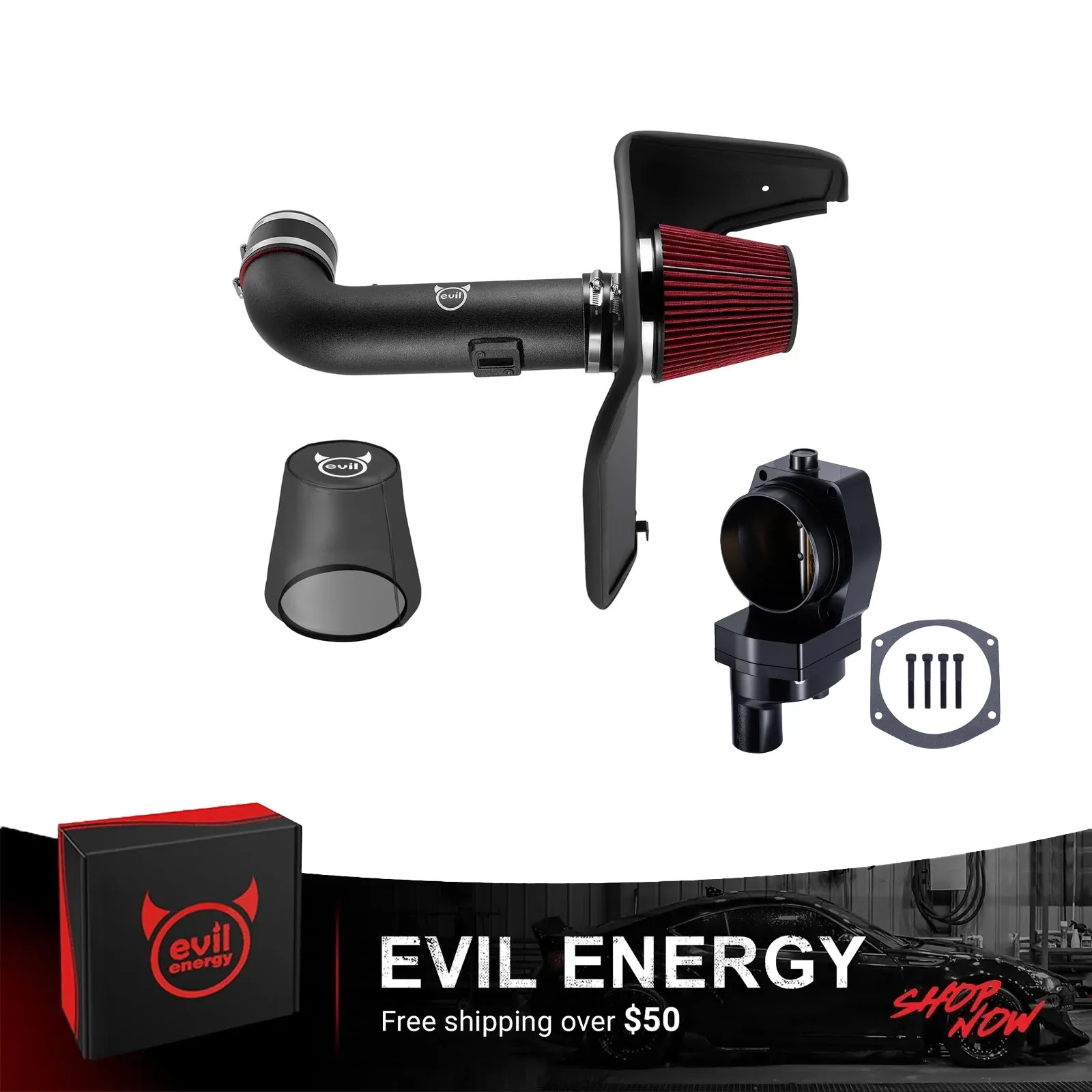
EVIL ENERGY provides engineered matched bundles, such as cold air intake piping paired with enlarged electronic throttle bodies (85mm for modern HEMIs and 92mm to 102mm for GM LS platforms). These units retain factory drive-by-wire Throttle Position Sensor (TPS) communication while presenting a wider cross-sectional area to incoming air. When coupled with smooth aluminum intake tubing and oiled cone filters, they help minimize intake air temperatures and stabilize runner velocity.
- Flange and Bolt Pattern: Confirm whether your intake manifold utilizes a 4-bolt or 3-bolt throttle body pattern, and check that the manifold snout diameter accommodates the larger throttle blade without binding.
- Drive-by-Wire Calibration: Replacing an electronic throttle body increases initial airflow at low blade angles. Plan for an ECU throttle relearn or custom engine tune to optimize idle stability and acceleration fueling.
- Thermal Shielding: Utilize included air box heat shields to isolate the conical air filter from hot under-hood radiator wash, drawing denser air from inner fender wells.
- Confirm operating fuel pressure requirements: carbureted setups typically require low-pressure regulation (5–12 PSI), whereas modern EFI and LS swaps demand 58 PSI or adjustable 20–120 PSI bypass regulators.
- Verify fuel hose material compatibility: specify PTFE core tubing if running E85 ethanol blends or enclosed vehicle routing to prevent fuel odor permeation.
- Check fitment specs, pipe diameters, and throttle body pinouts against your vehicle's engine bay clearance, manifold flange, and wiring harness.
05
FAQ
What is the difference between a 6AN, 8AN, and 10AN fuel line?
AN (Army-Navy) sizes indicate internal diameter in 1/16-inch increments. A 6AN line has an approximate 3/8-inch inside diameter, which is the standard size for most street and mild race EFI setups up to roughly 500–600 horsepower. An 8AN line (1/2-inch ID) and 10AN line (5/8-inch ID) provide the higher volume required for high-horsepower forced induction builds or primary fuel cell feeds.
Can I use EVIL ENERGY PTFE fuel line fittings on standard CPE rubber hose?
No. PTFE hose ends utilize a distinct internal brass olive (ferrule) that wedges between the PTFE inner core and outer braid to form a seal. They are not interchangeable with cutter-style or push-lock fittings meant for CPE rubber hose. Always match PTFE fittings strictly with PTFE-specific hose.
Why do carburetor setups require a dedicated fuel pressure regulator?
Most electric fuel pumps output between 40 and 80 PSI or more, which will easily blow past the delicate needle and seat assembly inside a carburetor, causing severe flooding and fire hazards. Carbureted systems require a low-pressure regulator (typically 5–12 PSI, dialed down to around 5–7 PSI) to keep fuel bowls steady without overflowing.
Do I need to tune my vehicle after installing an electronic throttle body and cold air intake?
While some modern engine computers can adapt slightly over time, installing an enlarged electronic throttle body (such as an 85mm or 92mm unit) alters the throttle blade airflow curve and mass airflow meter readings. An ECU calibration or throttle relearn sequence is strongly recommended to ensure smooth idle and prevent check engine lights.
Where should I check for current pricing, return terms, and shipping options?
You should always confirm live product pricing, inventory availability, shipping thresholds, and warranty details directly on the official EVIL ENERGY merchant checkout page before completing your order.
Disclosure: this article may contain affiliate links. We may earn a commission if you purchase through these links, at no extra cost to you.